San Francisco Parks Alliance
Bye Bye Freeway: Octavia Public Art Installation
A community-designed public art proposal connected the removal of San Francisco’s Central Freeway to an ongoing invitation for civic action.
- My role
- Community and interaction design lead
- Timeline
- Apr–Jul 2021 · Community co-design and public-art RFP
- Status
- Finalist Proposal
- People
- YC Sun · project lead
- IDEO experience, interaction, industrial, and visual designers
- Gizmo SF · fabrication and installation partners
The challenge
Removing San Francisco’s Central Freeway transformed Hayes Valley, but the change came from years of organizing by residents, advocates, and public agencies. The San Francisco Parks Alliance sought a permanent artwork that could honor that civic history without reducing it to a monument people simply passed.
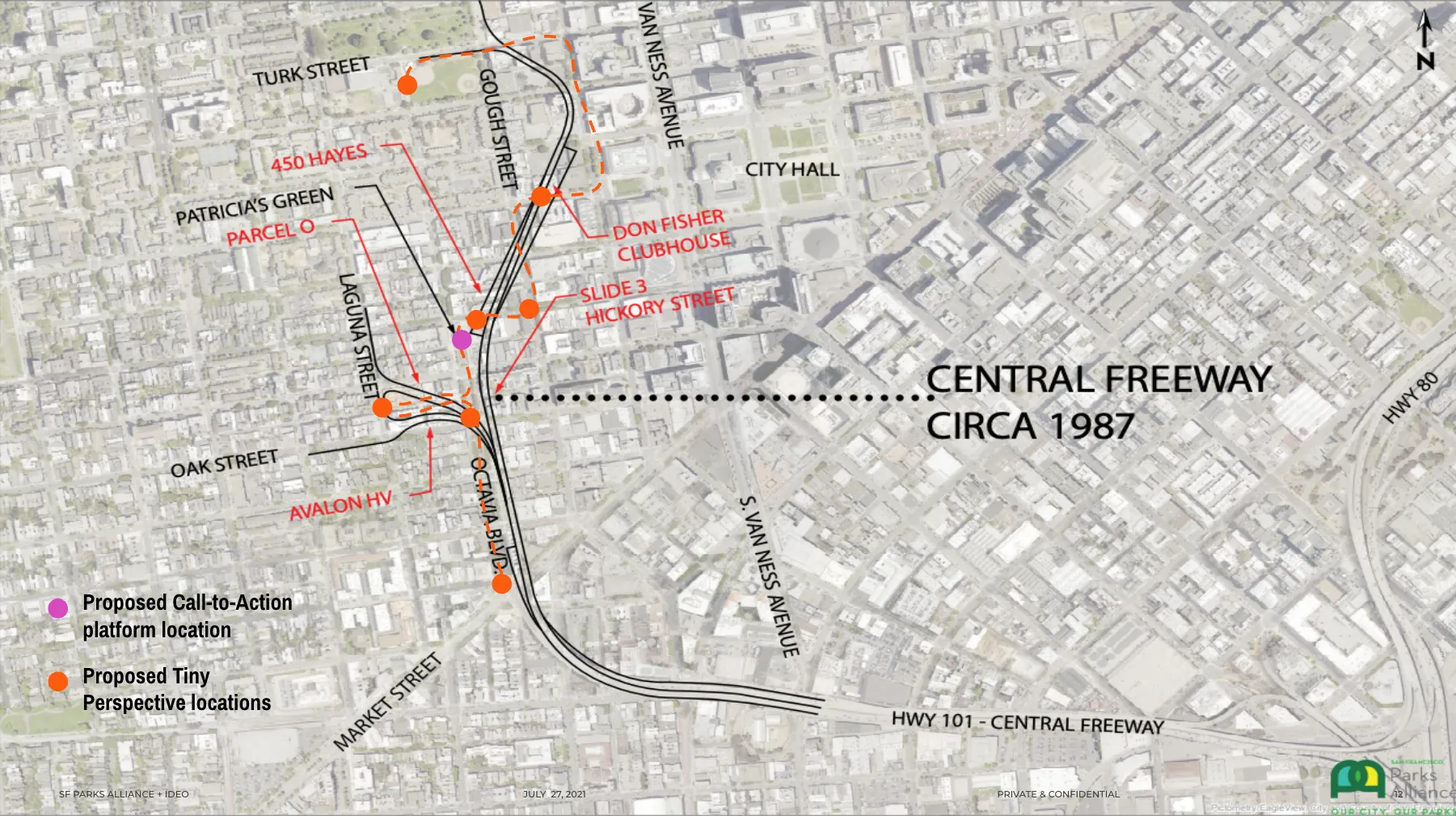
The installation needed to work for neighbors, visitors, and organizers while fitting a real public site with fabrication, permitting, and long-term stewardship constraints.
My contribution
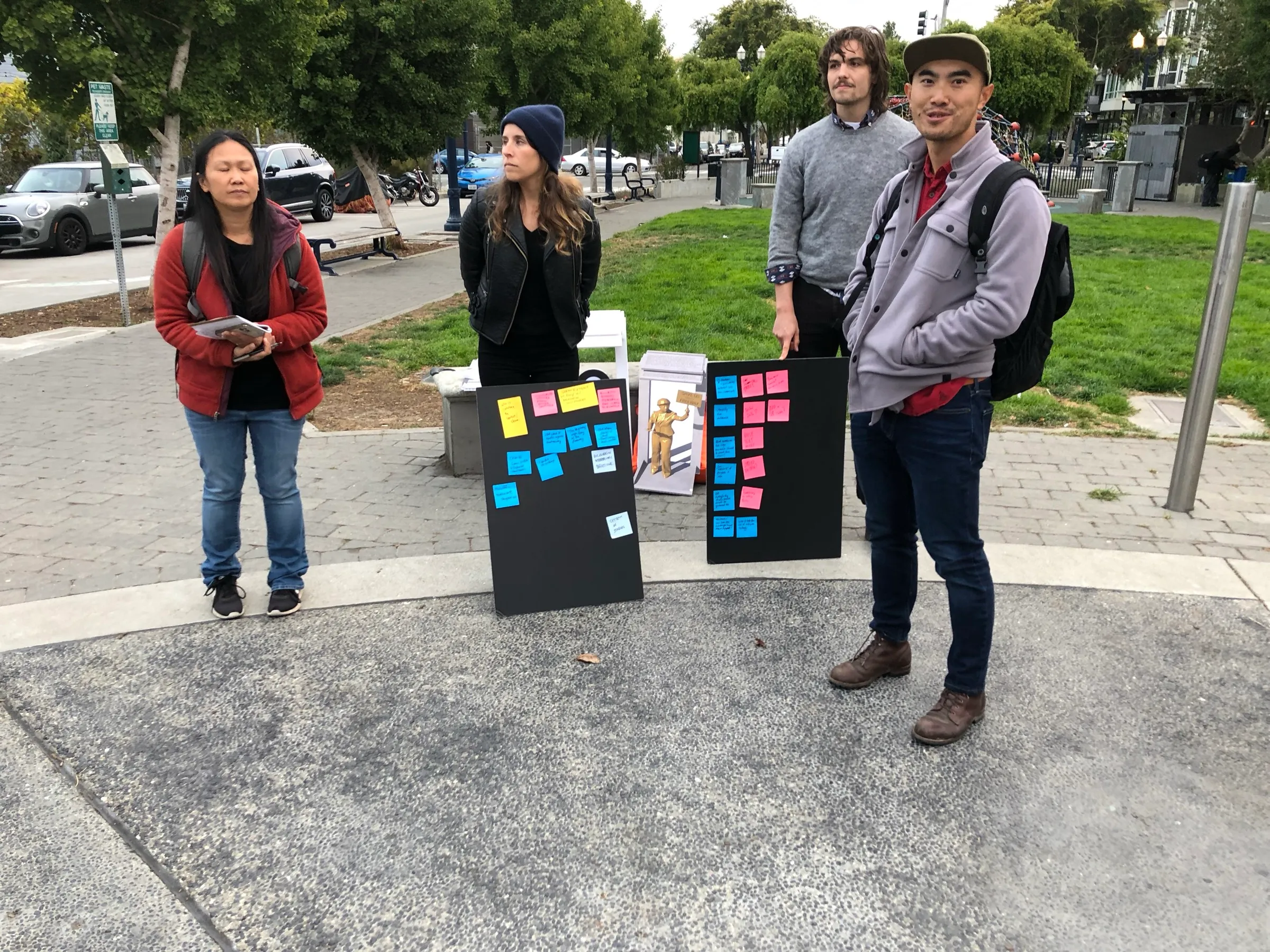
I led the project through neighborhood research, community engagement, concept development, and the final public-art proposal. We interviewed activists, historians, residents, and public-sector partners, walked the site together, and surfaced a central tension: the work had to preserve history while showing that civic change remains unfinished.
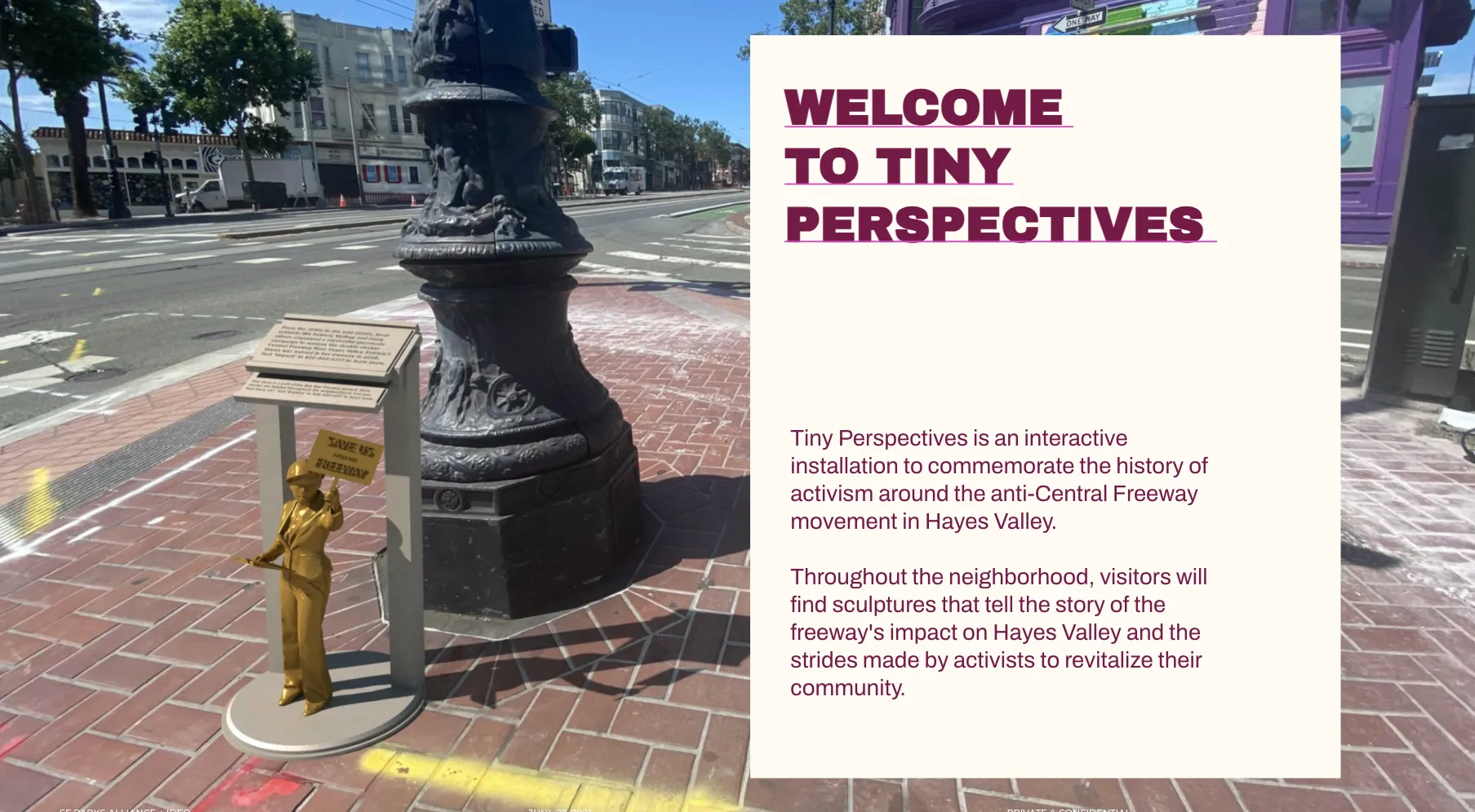
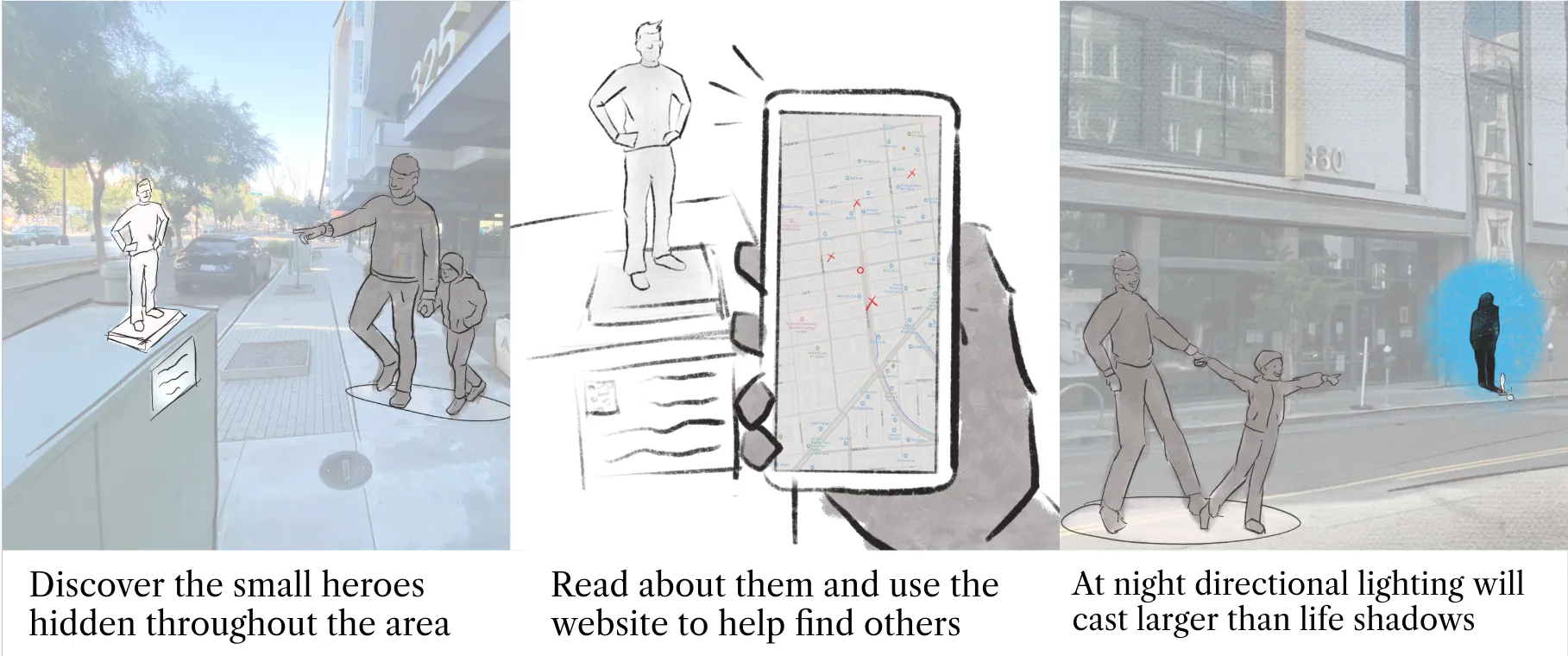
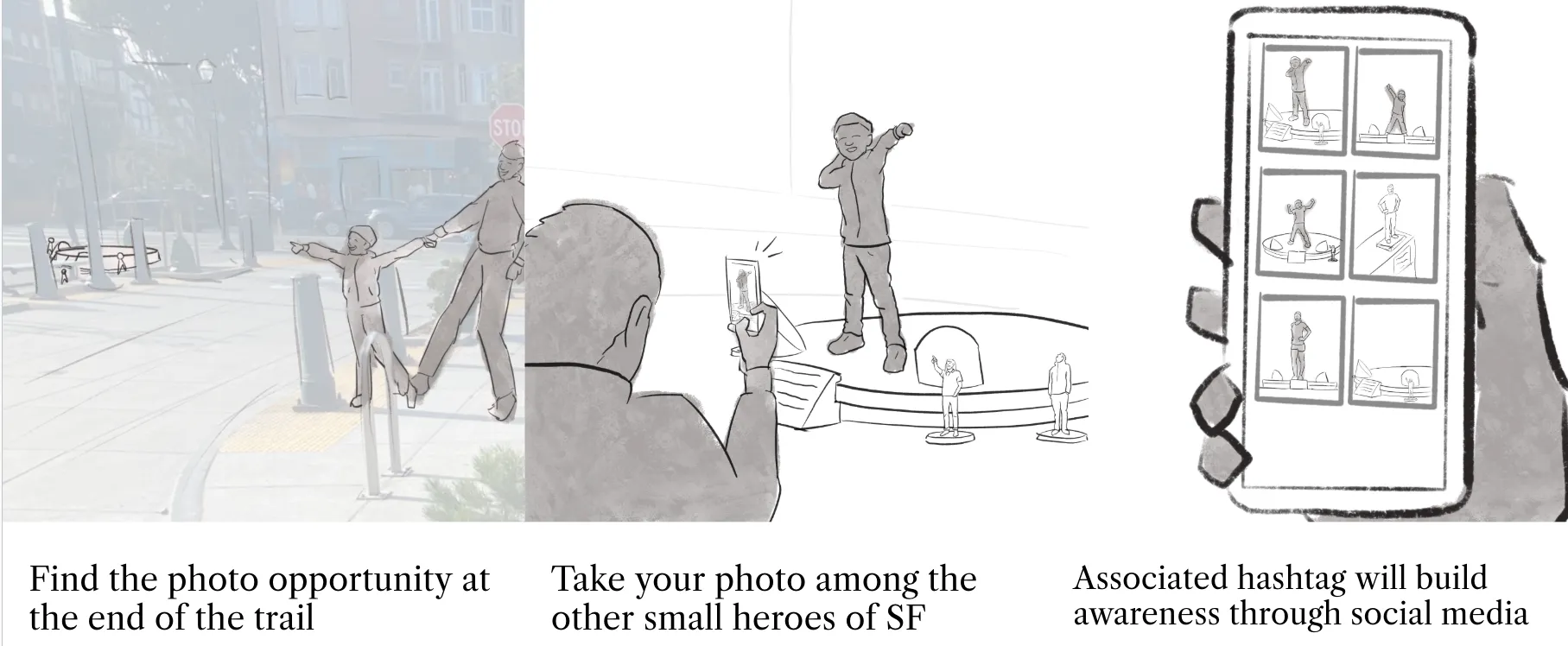
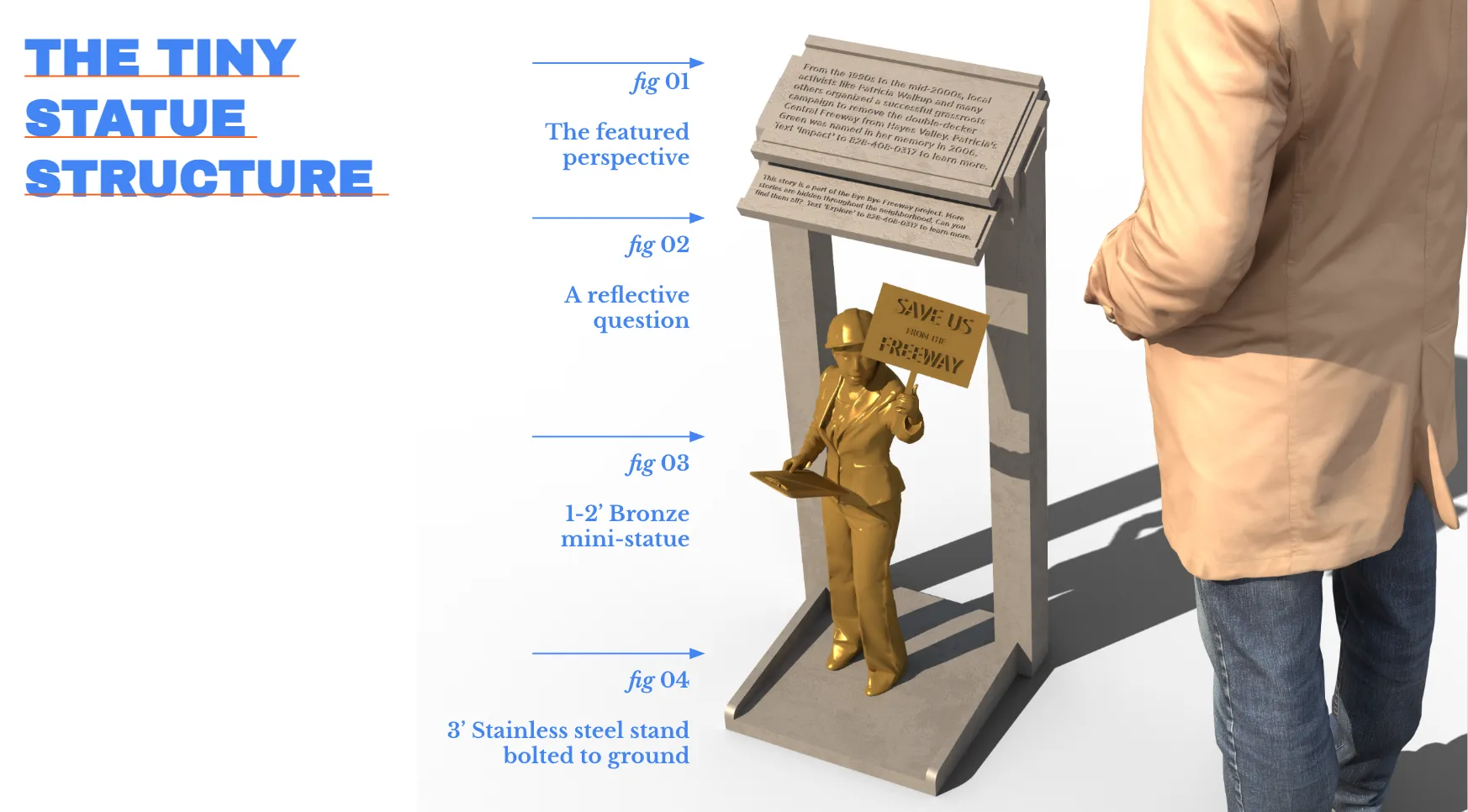
That insight became Tiny Perspectives, a walkable network of ten miniature bronze sculptures and story stations. I shaped the experience around three layers:
- Created a small physical encounter that rewarded close looking and invited curiosity.
- Presented a specific perspective from the campaign to remove the freeway, supported by archival material through SMS.
- Connected past organizing to the visitor’s own role in shaping the city through a question or action.
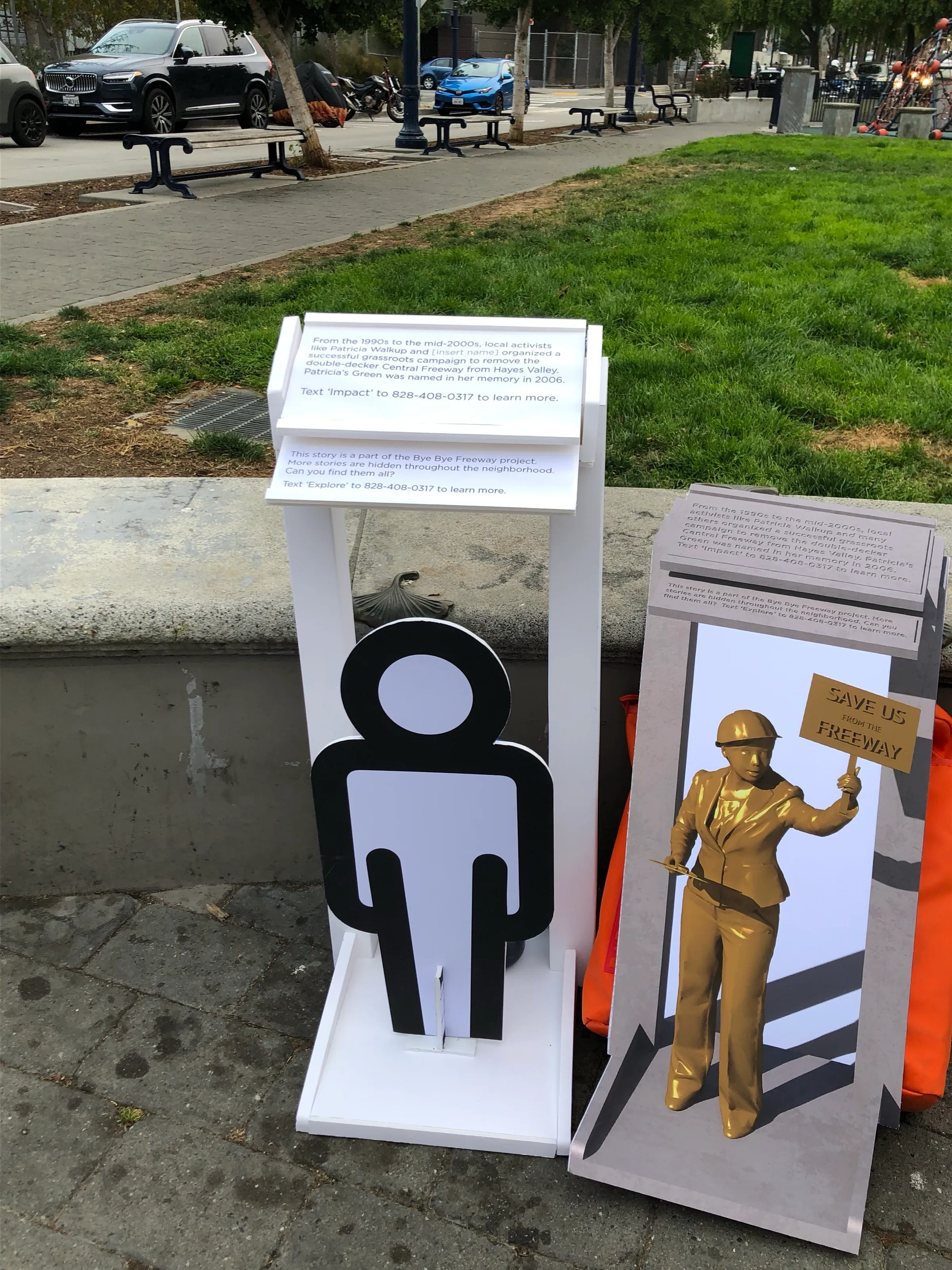
Working with fabrication partner Gizmo SF, we tested scale, materials, visibility, site conditions, and maintenance through full-size prototypes and community walk-throughs.
The impact
IDEO’s proposal was selected as one of two finalists from more than a dozen submissions. Although another concept was ultimately installed, the process earned strong feedback for its community knowledge, research depth, and ability to translate a complicated civic history into an accessible public experience.
The proposal showed how commemorative art can distribute attention rather than centralize it. Instead of telling one official story, Tiny Perspectives let people assemble history across the neighborhood and positioned civic memory as an invitation to participate in what happens next in the neighborhood.