Vulcan
Product Opportunities for Saving Our Oceans
Systems research and large-scale text analysis identified seven barriers to ocean-health action and translated them into two data-product concepts.
- My role
- Creative technologist · Product and interaction designer
- Timeline
- Jan–May 2020 · Fifteen-week research and concept program
- Status
- Concept
- People
- IDEO design, research, and data science team
- Vulcan product, engineering, and ocean-health partners
The challenge
Ocean health spans policy, science, conservation, industry, and local practice. Vulcan wanted to identify where data and technology could help, but the mandate was too broad to support a responsible product decision. Before proposing a platform, the team needed to understand the barriers practitioners shared across very different parts of the system and how evidence moved, stalled, or disappeared between them.
My contribution
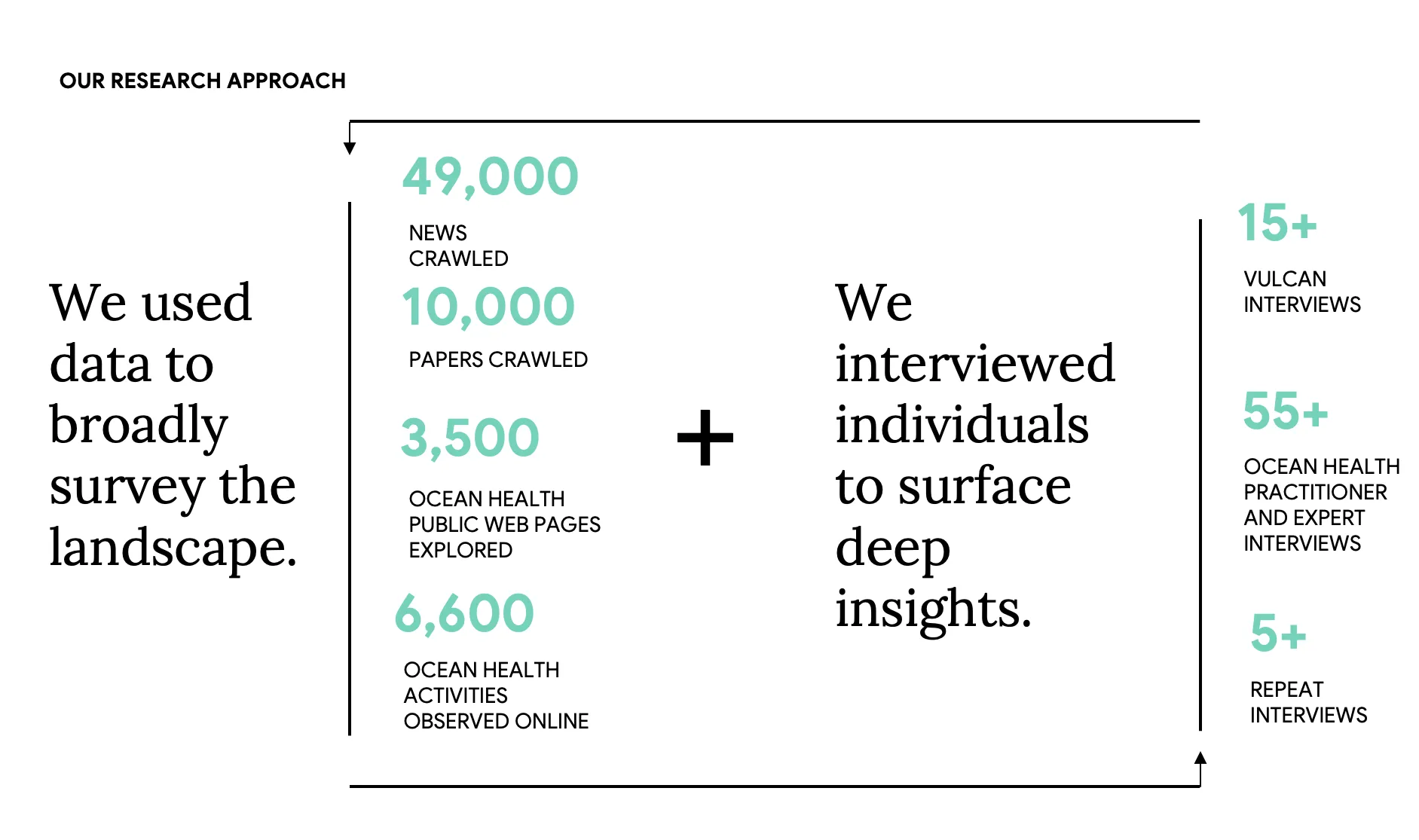
I worked as a creative technologist and product designer across research, synthesis, and product concepting. The evidence combined more than 55 expert interviews with large-scale analysis of 10,000 research papers and 49,000 news articles.
I helped turn that material into a common systems frame:
- Mapped harms, interventions, actors, and data gaps across the ocean-health ecosystem.
- Used natural-language processing to find patterns at a scale interviews alone could not cover.
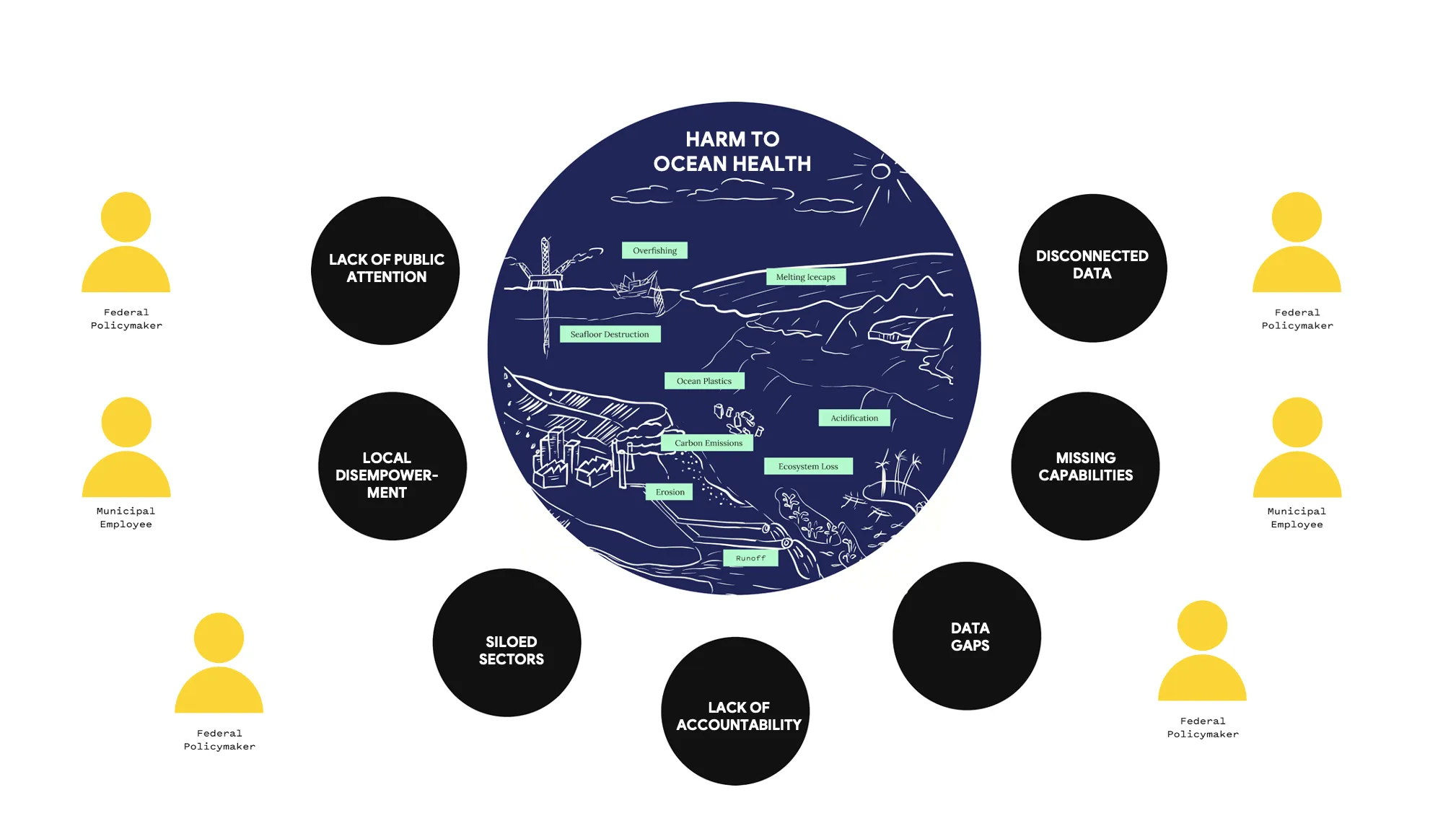
- Synthesized seven cross-cutting barriers that practitioners could recognize despite working in different domains.
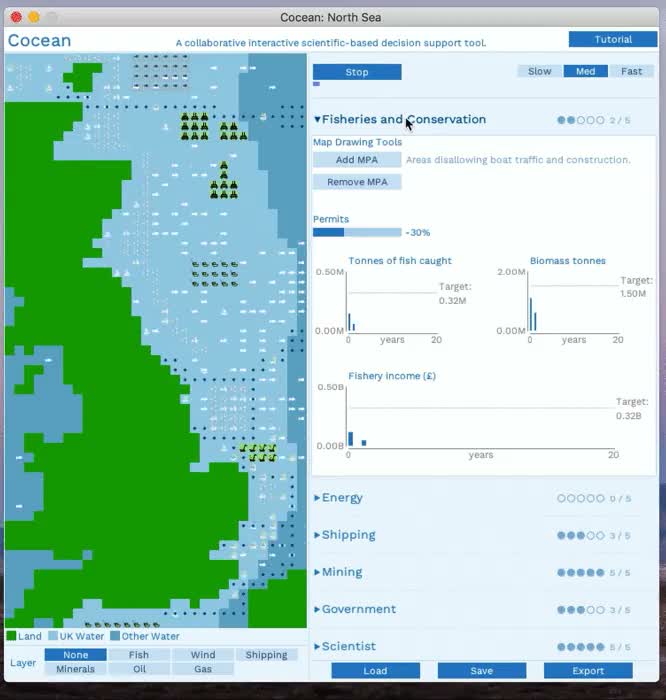
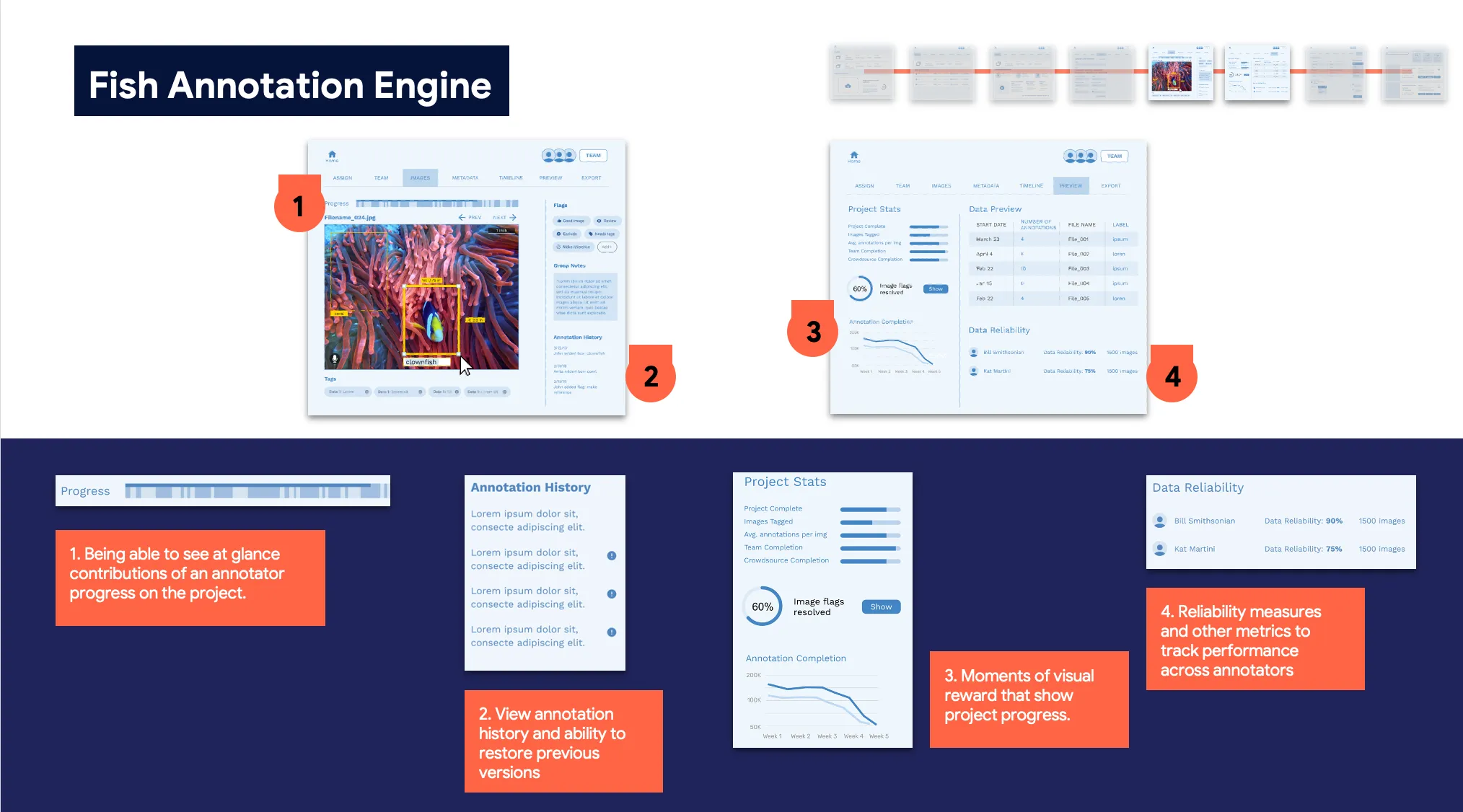
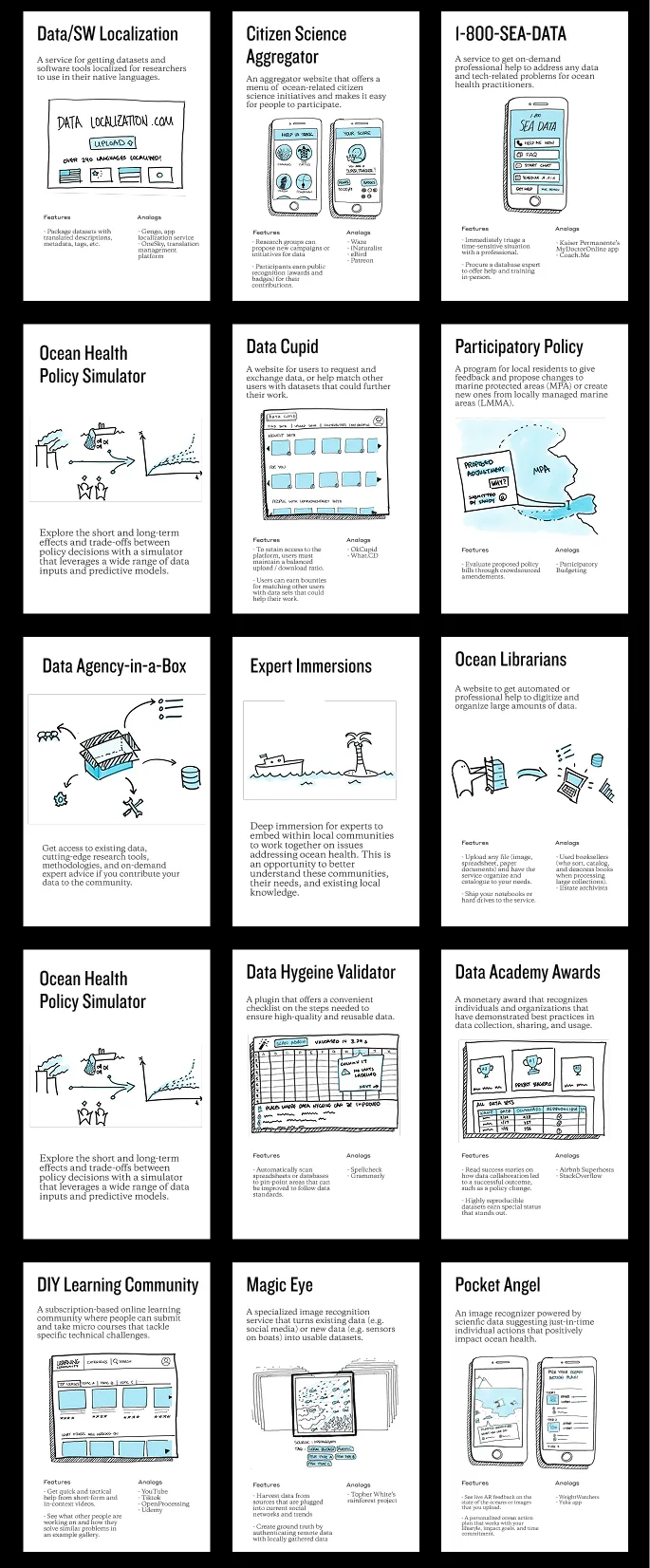
From that foundation, I designed and prototyped two product directions. An Ocean Data Annotation Platform would let practitioners collectively label and improve fragmented evidence. A Policy Preparation Engine would help teams examine scientific evidence, stakeholder positions, and trade-offs before a policy process begins. The interactive simulator made the second concept concrete enough to test rather than leaving it as a strategy diagram.
The impact
The work gave Vulcan a shared language for deciding where technology could help and where a new tool would only add complexity. The two concepts connected broad systems findings to defined users, workflows, and value propositions.
Although the products did not progress to launch, the work produced a reusable research method for combining qualitative fieldwork with computational analysis. It demonstrated how AI could widen the evidence base without replacing practitioner judgment, and how an expansive mission could become a small set of specific, testable product bets for future investment.
Press & sources
Interactive prototype
Try the policy simulator
Work through a North Sea policy with live evidence layers and stakeholder trade-offs.