Kapor Center / SMASH
STEM Career Platform for Underrepresented Students
A mobile-first platform helped Black and Latinx students explore STEM careers through people, paths, and opportunities they could recognize themselves in.
- My role
- Product strategy and co-design lead
- Timeline
- Jul–Aug 2020 · Four-week pro-bono sprint and advisory support
- People
- YC Sun · project lead
- IDEO digital, video, and communication designers
- SMASH scholars and Kapor Center partners
The challenge
The pandemic disrupted the in-person programs through which SMASH helped Black and Latinx students imagine futures in STEM. Career information still existed online, but lists of roles and abstract advice did little to make an unfamiliar path feel possible. Kapor Center needed a digital experience that could inspire students, work on the phones they already used, and launch with limited production capacity.
My contribution
I led the four-week pro-bono sprint across product strategy, co-design, and delivery, then continued advising the team. Five SMASH scholars joined as design partners and changed the premise of the work: students did not need more career data; they needed authentic people, visible journeys, and a useful next step.
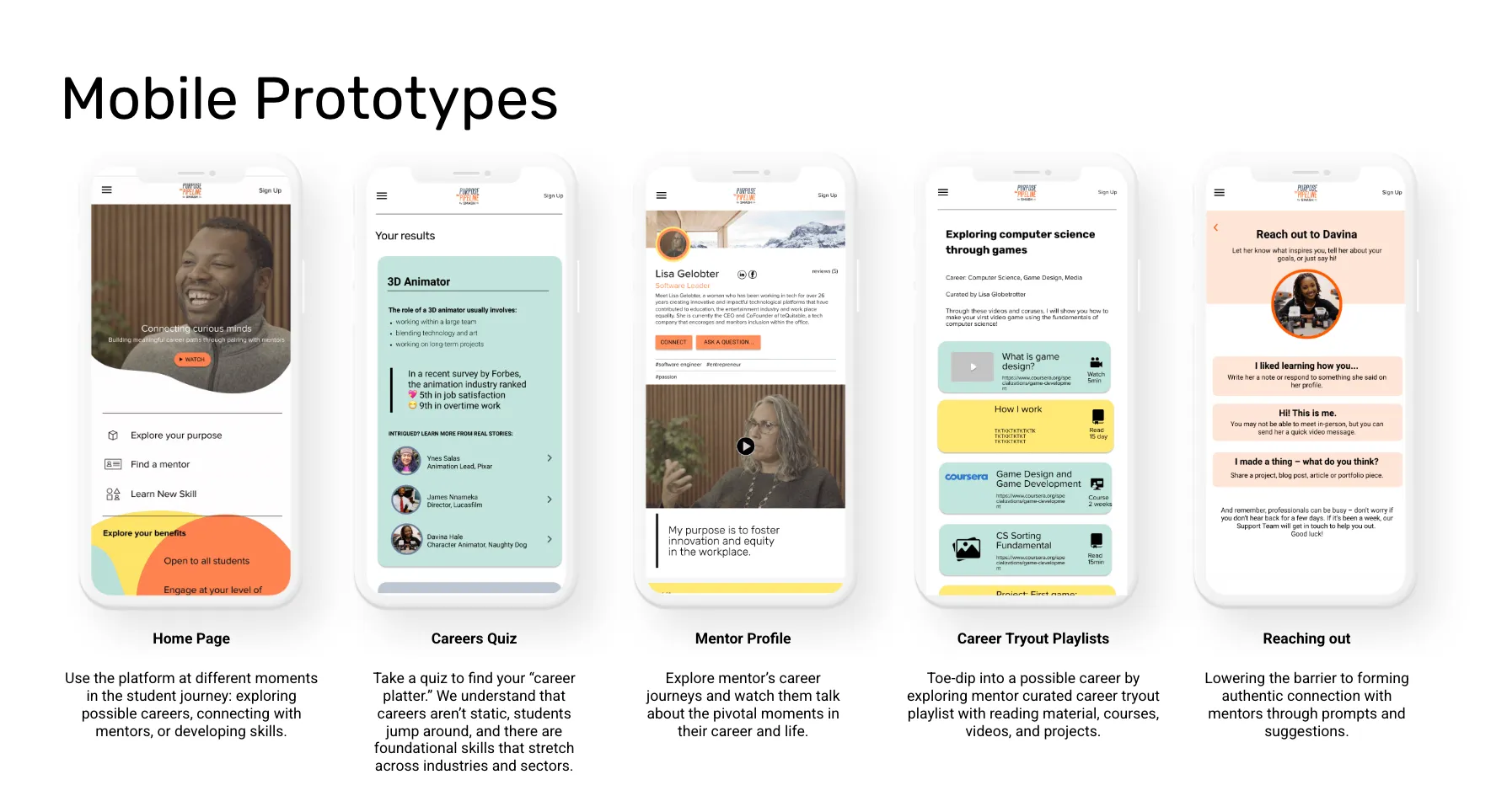
Together we shaped Purpose Pipeline around a repeatable experience:
- Discover interests through a mobile-first assessment rather than begin with a job title.
- Meet career champions through short videos that made different STEM paths personal and credible.
- Connect each story to the education, experiences, and opportunities a student could pursue next.
I also helped turn existing long-form interview footage into a scalable short-video format, then paired the product prototype with a roadmap, distribution plan, and fundraising story. This treated representation as an ongoing product capability rather than a one-time communications campaign.
The impact
Purpose Pipeline reached more than 470 students during its first six months. The concept and operating model later informed SMASH Career Catalyst, a broader career-readiness program now active across more than 30 schools.
The interface was one part of the project’s value. Co-design changed what the platform considered evidence, which stories it prioritized, and how students moved from inspiration to action. It gave SMASH a practical digital foundation for career exploration while keeping the people the program served directly involved from the beginning in defining what a believable STEM future should look like.