Somni
Third-Shift Sleep Health Program
A sleep coaching experience designed around overnight work helped people turn confusing data into practical experiments and sustained support.
- My role
- Product design lead · Digital prototyping lead
- Timeline
- Dec 2020–Feb 2021 · Startup in Residence and one-week sprint
- Status
- Live
- People
- YC Sun · sprint lead and digital prototyping
- IDEO Design for Health advisors and designers
- Somni sleep coaches, researchers, and product team
The challenge
Most sleep guidance assumes a person works during the day and sleeps at night. Third-shift workers face a different system: changing schedules, daylight, family obligations, workplace constraints, and advice that often feels impossible to apply. Somni needed to adapt its sleep-coaching program to those realities while building an offering an employer could support at scale without flattening individual needs into a generic wellness benefit.
My contribution
I led a focused design sprint within a longer Startup in Residence partnership, owning product design and digital prototyping. Research with overnight workers showed that another score would not help on its own. People needed understandable explanations, permission to experiment, and guidance that accounted for the context surrounding each sleep period.
I guided the team from those findings into seven concept areas spanning the worker and employer experiences, and made the strongest directions tangible:
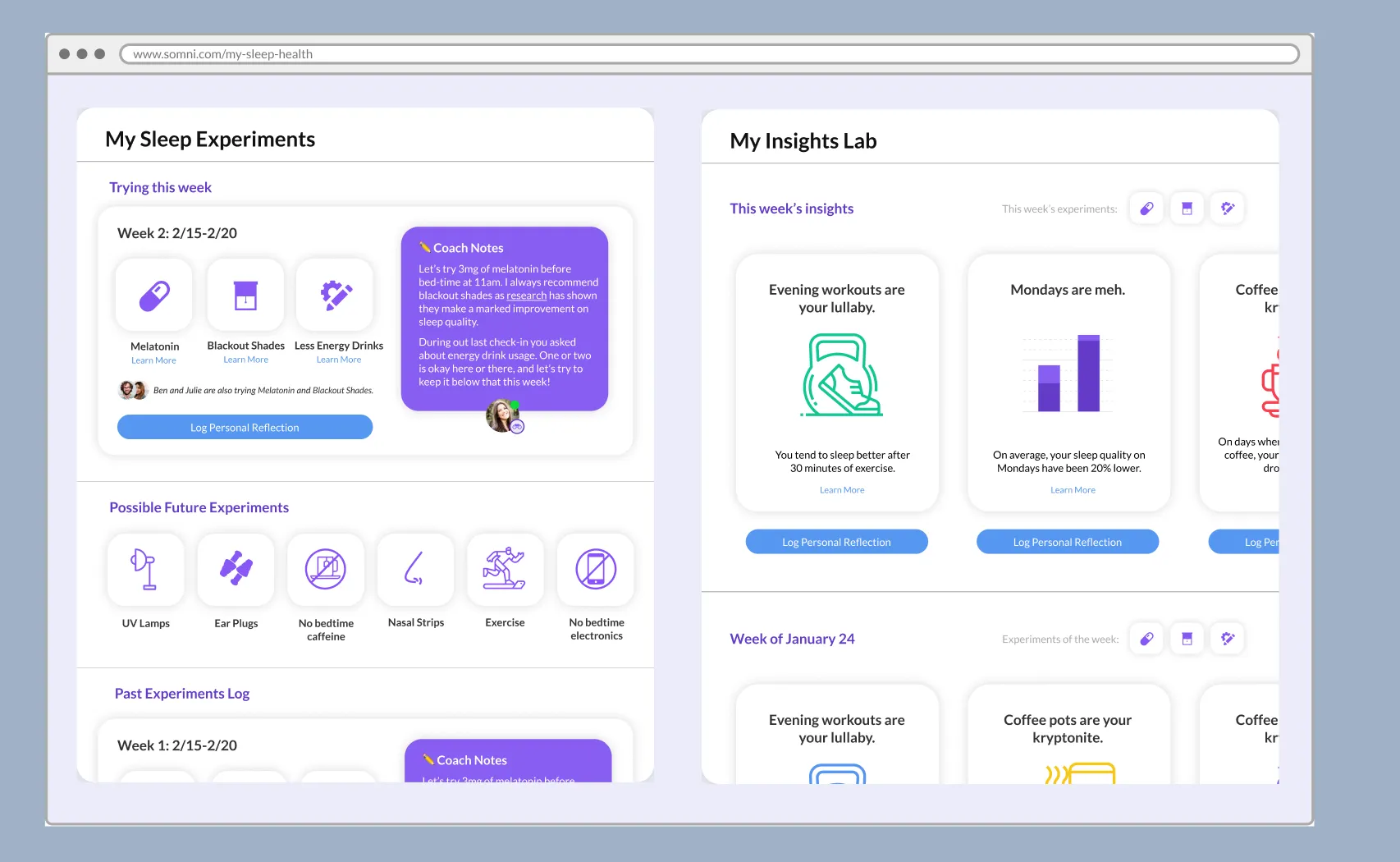
- Designed a Sleep Lab that translated personal data into hypotheses people could test rather than judgments about performance.
- Connected coaching, peer cohorts, and sleep experiments to each person’s schedule, environment, and next action.
- Prototyped employer dashboards that showed program value without turning sensitive sleep data into workplace surveillance.
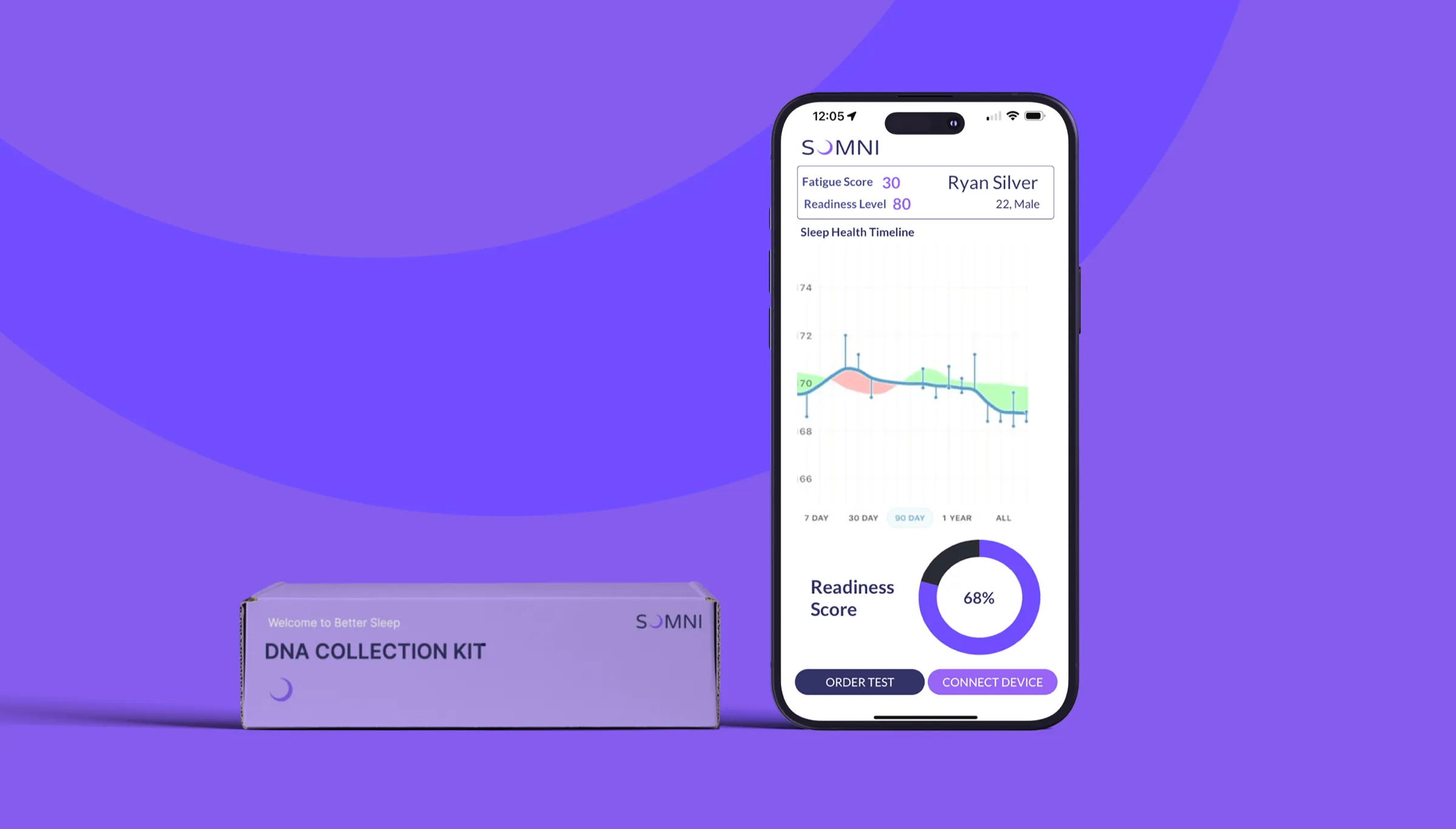
- Explored how genetic and biomarker testing could become an understandable part of the coaching experience.
High-fidelity prototypes let Somni evaluate the complete experience quickly and decide what belonged in the product, the coaching relationship, and the enterprise program.
The impact
The resulting program moved into implementation and supported a third-shift deployment with FedEx. Participants gained 41 additional minutes of sleep per night, reported a 33% improvement in sleep quality, and remained in the program at a rate above 75%. Somni estimated annual savings of $2,450 per participating employee.
Those results helped Somni convert a general sleep platform into a differentiated enterprise service. The design did not ask overnight workers to imitate a daytime routine; it made their constraints part of the product model and treated sustainable change as a sequence of supported experiments.